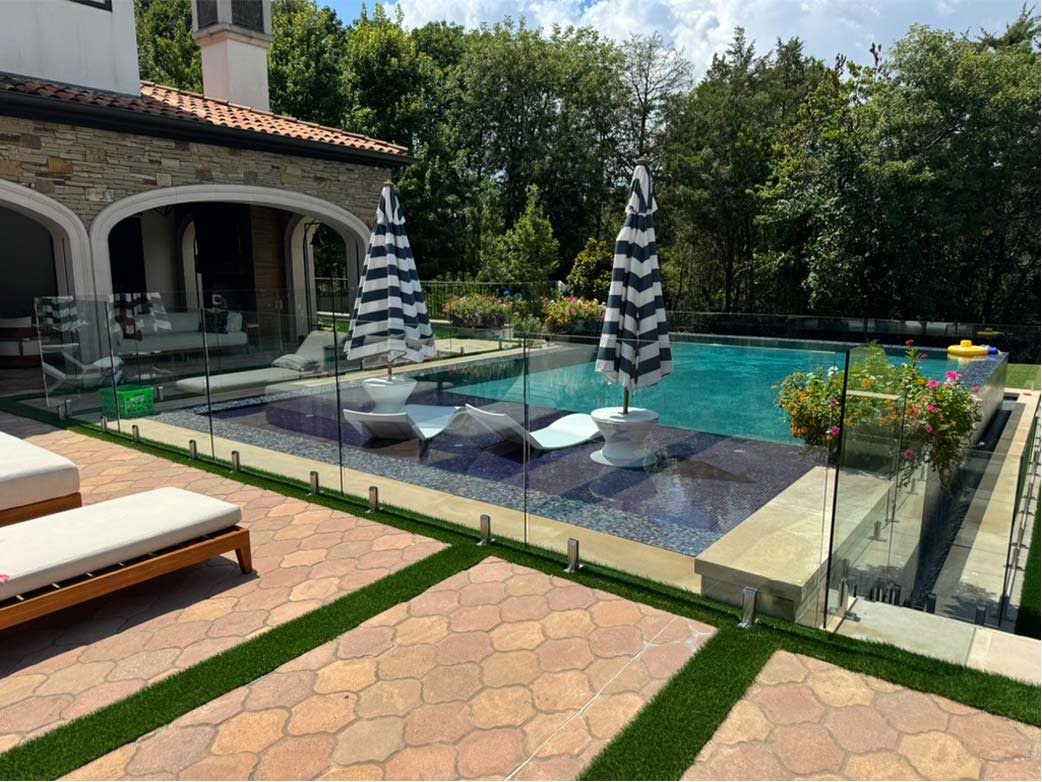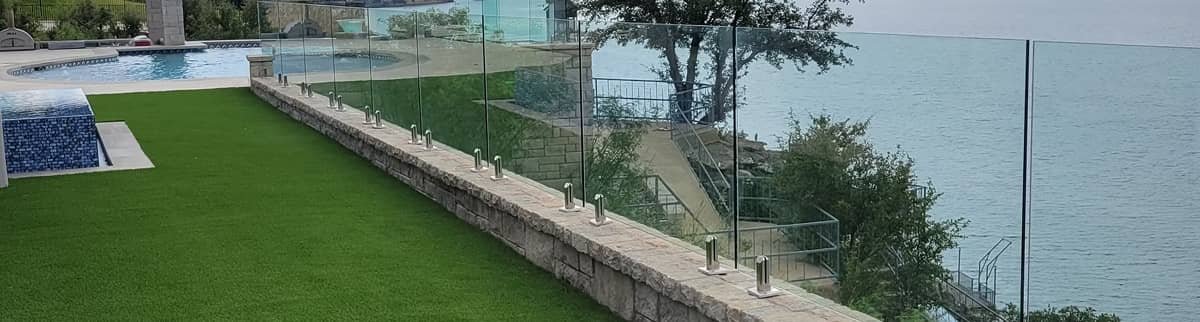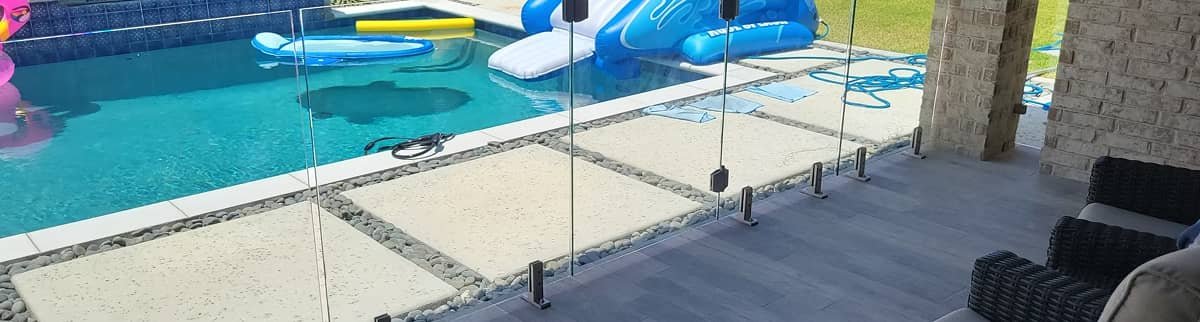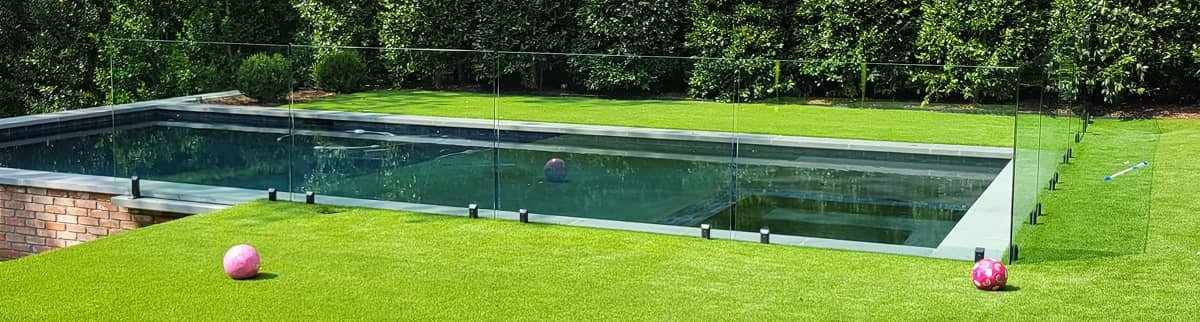
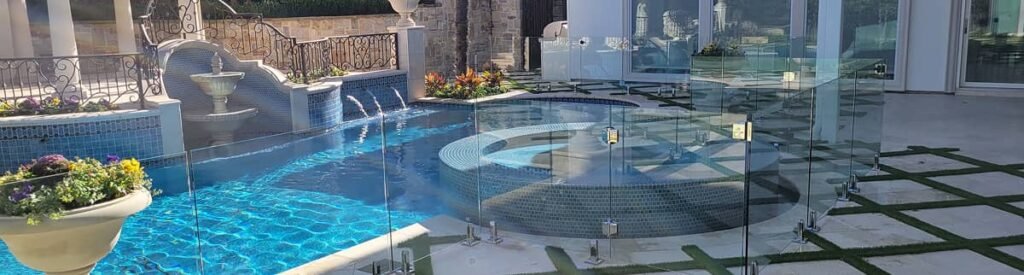
A glass pool fence is one of the lowest-maintenance fencing options available. There’s no painting, no staining, no rust to worry about, and no wood warping in the Texas heat. But low maintenance doesn’t mean zero maintenance. Choosing custom glass fencing and keeping your hardware tight and your gate functioning correctly is what separates a fence that looks great and performs safely for decades from one that quietly deteriorates until something fails.
Here’s what a solid maintenance routine actually looks like.
Regular Glass Cleaning
The most visible part of maintenance is keeping the panels clean. In the DFW area, panels pick up dust, pollen, sunscreen residue, pool chemical overspray, and mineral deposits from hard water. Left alone, these build up into a hazy film that dulls the fence and makes it harder to see through.
A thorough cleaning every eight to ten weeks is the right cadence for most homeowners. Use warm water with a small amount of mild dish soap, a microfiber cloth or soft sponge, and a rubber squeegee to finish. Avoid abrasive pads, ammonia-based cleaners, and bleach, all of which can scratch or etch the glass surface over time.
For hard water deposits that won’t come off with soap and water, a 50/50 white vinegar and water solution applied directly to the affected area works well. Let it sit for a minute or two before scrubbing. In particularly stubborn cases, a dedicated calcium and lime remover does the job, but always test it on a small area first.
After heavy rain or a North Texas storm, do a quick rinse even if a full clean isn’t due. Storm runoff leaves mineral residue and grit on the panels, which becomes harder to remove the longer it sits.
Hardware Inspection and Care
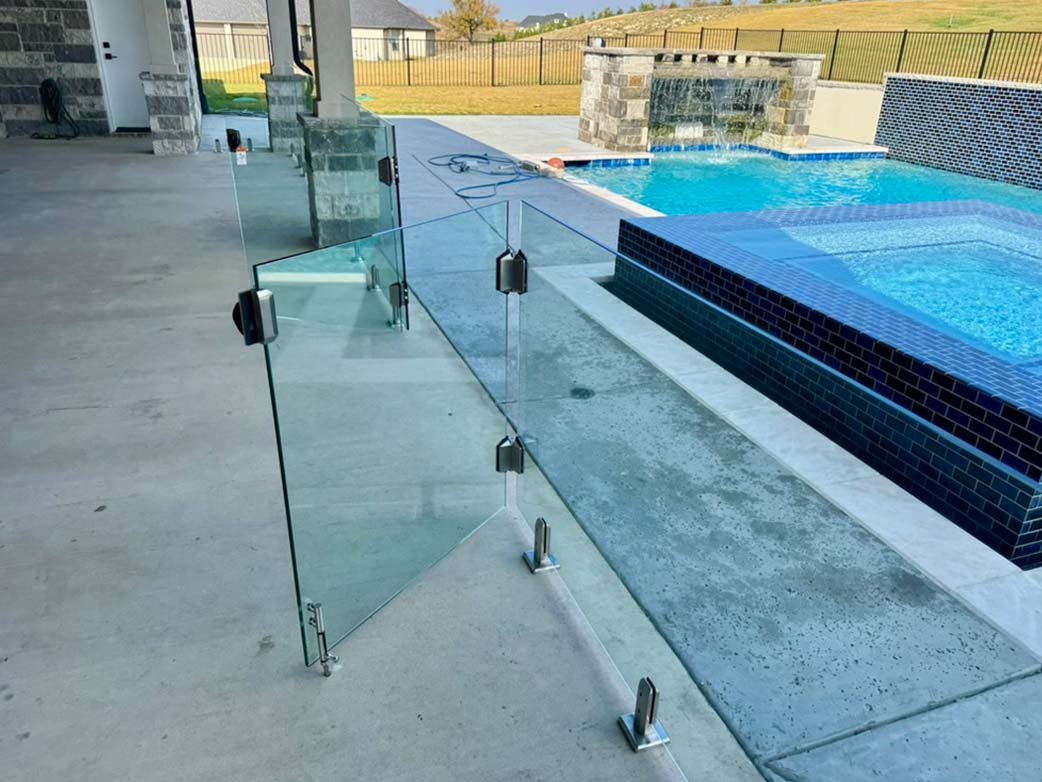
The glass panels get most of the attention, but the hardware is what actually holds everything together. Spigots, clamps, hinges, and gate latches are exposed to pool chemicals, humidity, and UV year-round. Even high-quality stainless steel hardware benefits from periodic attention.
Every two to three months, walk the full fence line and check each piece of hardware by hand. Spigots and clamps should feel completely solid with no movement at all. Any loosening at the base, even slight, needs to be tightened before it progresses. A spigot that’s allowed to work loose puts stress on the glass panel it’s supporting and can lead to edge damage or, in the worst case, panel failure.
Wipe down all hardware with a damp cloth during each cleaning session to remove chlorine residue and grime buildup. For hinges and the gate latch mechanism, a light application of a silicone-based lubricant once or twice a year keeps everything operating smoothly and prevents corrosion from developing in the moving parts.
Gate Maintenance
The gate deserves its own attention because it’s the most heavily used component of the entire fence and the most critical safety element. A gate that fails to self-close or self-latch is a code violation and a real hazard, particularly in households with young children.
Test the gate every month. Open it from both sides and let it go without assistance. It should swing fully closed and latch on its own every single time. If it’s drifting open, failing to latch, or closing too slowly, the hinge tension needs to be adjusted. Most self-closing hinges have an adjustable oil-pressure valve that controls closing speed and force; a quick adjustment is usually all it takes.
Also, check the gate frame and hinges for any visible rust spots, corrosion, or cracking at the mounting points. These tend to develop slowly and are easy to miss during casual observation, but become obvious once you’re looking for them.
Post-Storm Inspection
North Texas weather can be rough on outdoor structures. After any significant storm, hail event, or period of high winds, inspect the entire fence before the pool is used again.
Check every panel for chips, cracks, or any new marks that weren’t there before. Pay particular attention to the edges and corners, which are the most vulnerable points on a tempered glass panel. Look at each spigot and mounting point for movement or visible damage. If a panel took a direct hit from debris, have it assessed professionally even if the damage isn’t obvious. Surface damage that looks minor can create internal stress points that worsen over time.
Protective Coatings
If you want to reduce the frequency of cleaning and make each session faster, a hydrophobic glass coating is worth considering. Products designed for this application bond with the glass surface and cause water to bead and run off rather than sitting and leaving mineral deposits. A quality coating significantly reduces hard water buildup and makes routine cleaning much simpler.
These coatings can be applied at installation or added to an existing fence at any time. If you’re interested, let us know during your consultation or service visit, and we can walk you through the options that work best in our climate.
When to Call for a Professional Inspection
Most routine maintenance is straightforward to handle yourself. But there are situations where it’s worth having a professional take a look: if you notice any panel edge damage you’re unsure about, if hardware feels loose at the base after retightening, if the gate mechanism isn’t responding properly to adjustment, or if your fence has been in place for several years without a formal inspection.
We offer service calls for exactly these situations. Our work is backed by a one-year installation warranty and a two-year product warranty on materials, and we’re available for ongoing support well after the initial installation is complete.
To schedule a maintenance visit or service call, reach us at (214) 316-8852 or through the contact form on our website. We serve Royse City, Rockwall, Dallas, Plano, Frisco, and communities throughout the greater DFW area.
Related Topics: