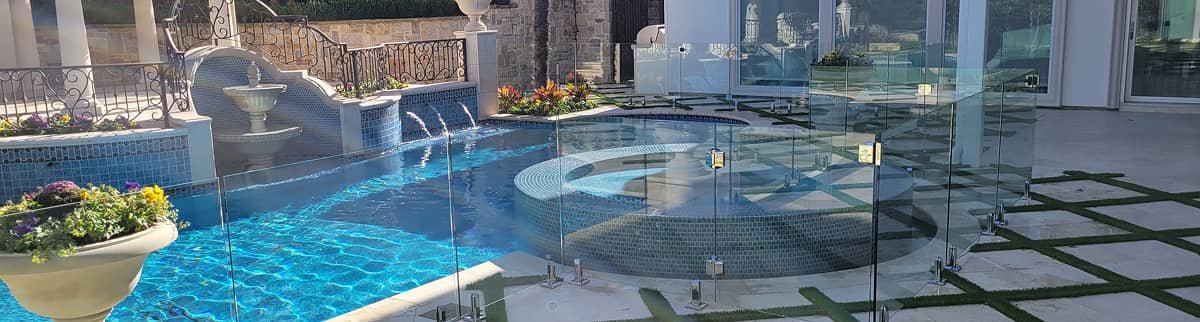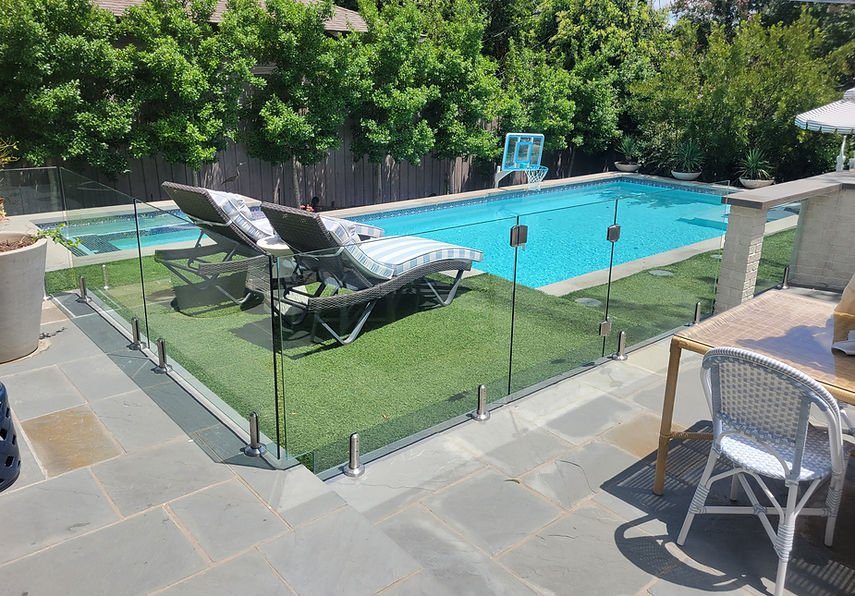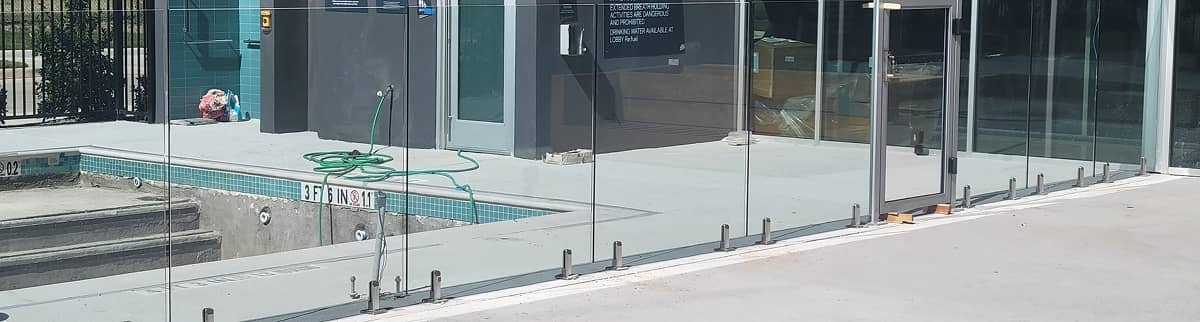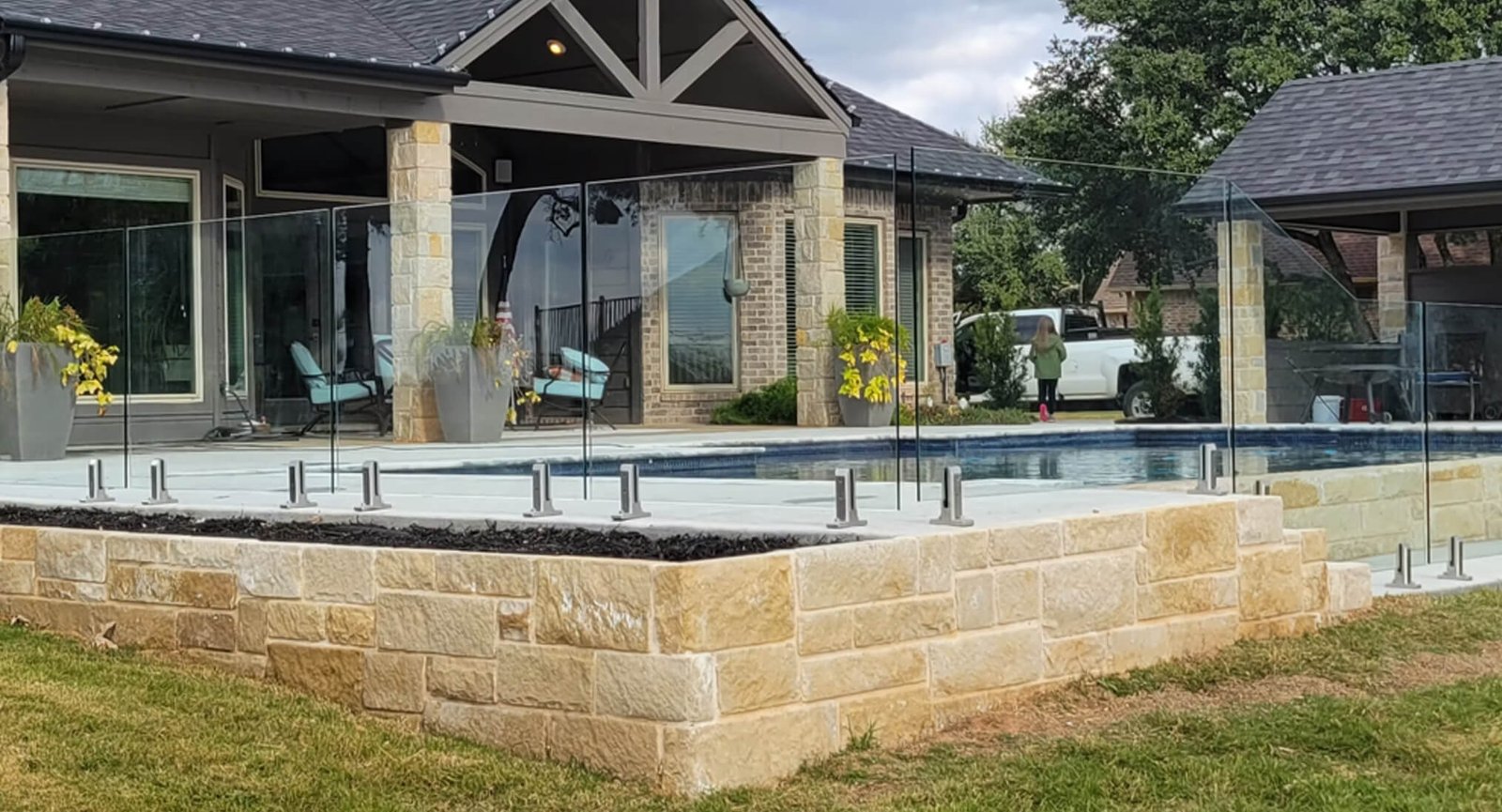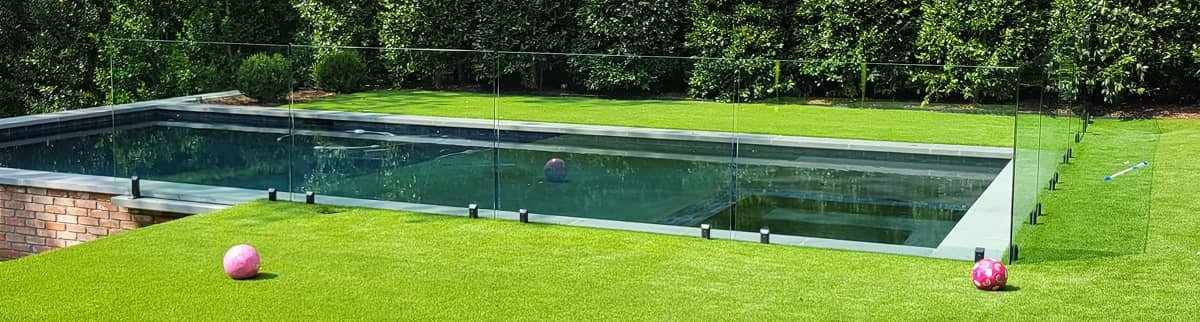
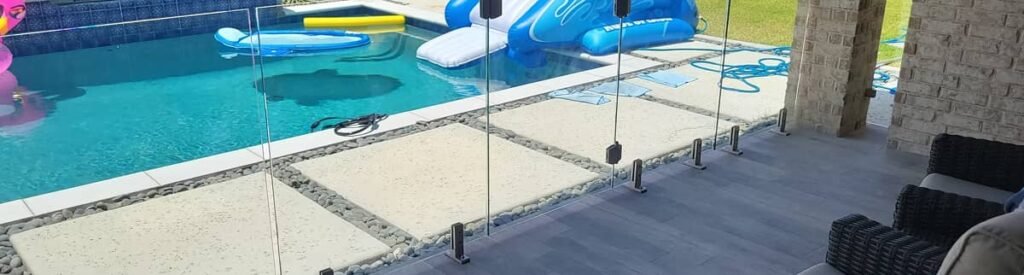
One of the biggest selling points of a glass pool fence is how little upkeep it needs. No painting, no staining, no rust. Still, “low maintenance” doesn’t mean ignoring it completely. A simple cleaning routine keeps panels looking sharp, protects your hardware, and lets you spot issues early, especially when using local glass fencing in Royse City, TX.
Here’s exactly how to do it.
What You’ll Need
You don’t need specialty products. Everything on this list is either already in your home or available at any grocery store.
- Garden hose
- Bucket of warm water
- Mild dish soap
- Microfiber cloth or soft sponge
- Rubber squeegee
- White vinegar (for hard water spots)
Avoid anything abrasive: steel wool, scouring pads, and metal scrapers will scratch the glass permanently. Also, skip ammonia-based cleaners, bleach, and acidic compounds. Used repeatedly, these products etch the surface and dull the finish over time.
Step 1: Rinse First
Start by rinsing both sides of every panel with a gentle flow from the garden hose. This removes loose dust, pollen, and debris before you start scrubbing, so you’re not dragging grit across the glass surface. Keep the water pressure low. A pressure washer isn’t necessary and can force water into hardware seals.
One important note for Texas summers: if the panels have been sitting in direct sun and are hot to the touch, let them cool in the shade before rinsing. Spraying cold water on heat-stressed glass can create thermal shock, which adds unnecessary stress to the panels.
Step 2: Wash the Panels
Add a small amount of mild dish soap to your bucket of warm water to create light suds. Dip your microfiber cloth or soft sponge, wring it until damp rather than dripping, and wipe each panel using consistent strokes. Work from the top down so dirty water doesn’t drip onto sections you’ve already cleaned.
Consistent strokes matter more than direction. Whether you go vertical or horizontal, overlapping each pass slightly ensures even coverage and prevents missed spots.
For stubborn buildup around the hardware or at panel edges, a 50/50 mix of white vinegar and water applied with a cloth works well. Let it sit for a minute or two to soften the deposit before scrubbing.
Step 3: Rinse Again
Rinse the panels thoroughly to remove all soap residue. Leftover soap film is one of the most common causes of streaking, so take your time here and make sure every panel is fully rinsed on both sides.
Step 4: Squeegee and Dry
Run the squeegee from top to bottom in overlapping strokes, wiping the blade clean between passes. This step is especially important in the DFW area, where hard water is common. If water is left to air dry on the glass, the minerals it carries leave spots that become increasingly difficult to remove over time.
For any edges or corners the squeegee can’t reach, follow up with a dry microfiber cloth.
Dealing with Hard Water Stains
If mineral deposits have already built up on your panels, standard soap and water won’t cut it. Mix equal parts white vinegar and water in a spray bottle, apply it directly to the affected area, and let it sit for a few minutes before scrubbing with a microfiber cloth. For heavier buildup, a product like a calcium and lime remover works well, but always test it on a small, inconspicuous area first before applying it across the whole fence.
Don’t Forget the Hardware
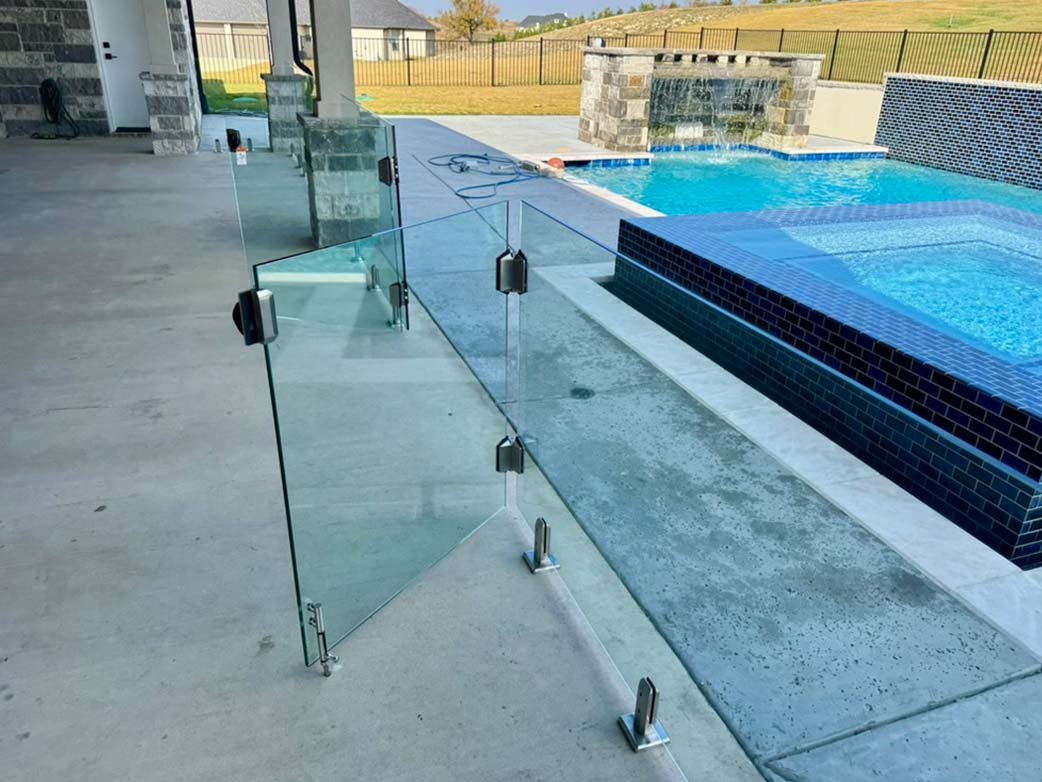
The stainless steel spigots, clamps, and gate hardware need attention, too. Wipe them down with warm, soapy water and a non-scratch pad, then rinse thoroughly. Pool chemicals and humidity are hard on metal over time, so keeping hardware clean and dry reduces the risk of corrosion and keeps everything operating smoothly.
While you’re cleaning, take a few minutes to check each piece of hardware for any loosening, and test the gate to confirm it’s still closing and latching properly. Catching a loose spigot or a gate that’s drifted out of alignment during a routine clean is far better than discovering it when something goes wrong.
How Often Should You Clean?
For most DFW homeowners, a thorough cleaning every eight to ten weeks is sufficient. If your pool sees heavy use in the summer, or if your property has trees dropping debris near the fence line, cleaning more frequently keeps buildup from hardening and becoming harder to remove.
After any major storm, do a quick visual check of the panels and hardware, even if a full cleaning isn’t due. North Texas weather can leave behind grit, debris, and impact marks worth catching early.
If your fence needs a professional inspection or you’re thinking about a new installation, we’re here to help. We serve Royse City, Rockwall, Dallas, Plano, Frisco, and communities throughout the greater DFW area. Reach us at (214) 316-8852 or fill out the contact form on our website to get started.
Contact Us
Have a question or ready to start your project? We’d love to hear from you! You can reach the Revelation Glass team by phone at (214) 316-8852 or send an email to revelationglassfence@outlook.com. Visit us at 4051 Harvest Meadow Circle, Royse City, Texas, if you’d like to talk in person.
Prefer online? Just fill out the contact form on our website, and we’ll get back to you soon. Whether it’s a quote, design inquiry, or support request, we’re here to help.
Related Topics: